Hola Blog!


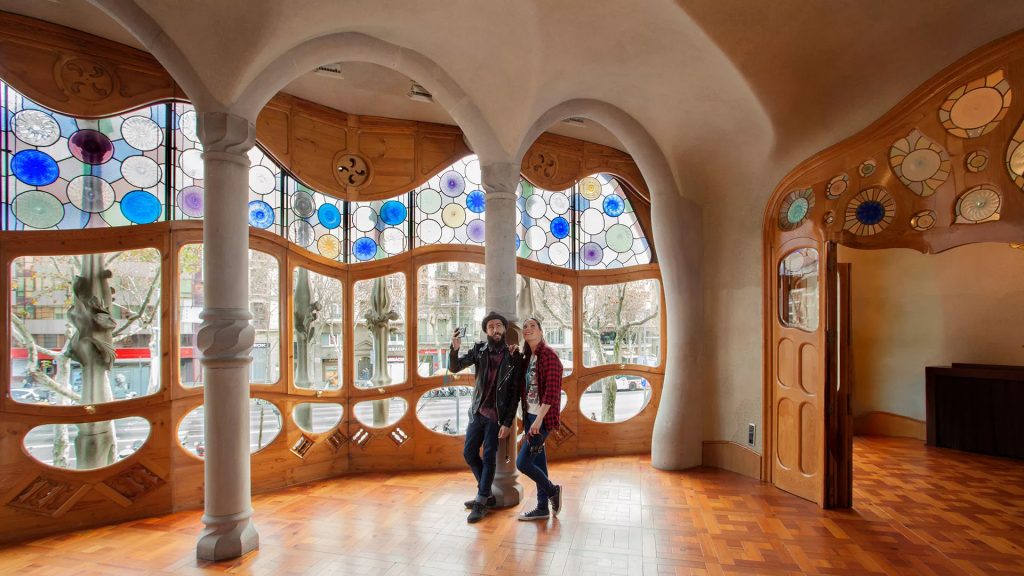
Casa Batlló is located at number 43 on Paseo de Gracia, Barcelona. A street that, in the past, connected the city to Villa de Gracia, which today is a fully integrated district of the city.
Since 1860, when an ambitious urban plan was approved in Barcelona, Paseo de Gracia has become the city’s backbone and its most important families started to set up home here. In this manner, in the 19th Century, the street became a promenade for pedestrians and horse-drawn carriages, and from the 20th Century it became a main avenue for cars. Originally, the building was built in 1877 by Emilio Sala Cortés (one of Gaudí’s architecture professors), when there was still no electric light in Barcelona. In 1903 it was purchased by Mr Josep Batlló y Casanovas, a textile industrialist who owned several factories in Barcelona and a prominent businessman.

Mr Josep Batlló granted full creative freedom to Antoni Gaudí, putting him in charge of a project that initially entailed demolishing the building. However, thanks to the courage shown by Gaudí, the demolition of the house was ruled out, and it was fully reformed between 1904 and 1906. The architect completely changed the façade, redistributing the internal partitioning, expanding the patio of lights and converting the inside into a true work of art. Besides its artistic value, the building is also extremely functional, much more characteristic of modern times than of the past. Some even see elements that herald the architectural trends of the late 20th Century.
At present, Casa Batlló is a UNESCO World Heritage site and an icon in Barcelona, a must see for those who want to discover Gaudí’s work and modernism at its finest. It is also one of the most highly rated cultural and tourist attractions, welcoming 1 million visitors every year.
Meermin is a family owned-operated business based in the beautiful island of Mallorca in Spain. They are dedicated to produce well made, quality Goodyear Welted shoes at a radical affordable price point.
The Albadalejo family is a historic of Mallorca’s shoemakers and nowadays is preparing a new opening with Meermin brand. The firm, led by Pepe Albadalejo, is finishing the launch of a new store in Paris, at district of La Madeleine. Meermin, based in Inca (Mallorca), already owns flagship stores in Claudio Coello Street in Madrid and Soho in New York, as well as trunk shoes in cities such as London, Los Angeles and San Francisco.
In the shoe industry for decades, they have been making a lot of shoes collections for high end well-known brands. Also been distributed through some of the top high-end international departments stores, they felt this was not the fairest one for the customer at all. Then Meermin came up with a solution for it: Making it simpler for everyone: Manufacture and B2C distribute them directly to end customers.
Meermin selects the finest materials available and source them directly from tanneries, and they also design and develop beautiful bags and accesories with them. They handcraft the shoes and distribute B2C them directly to you, without wholesalers, agents, retailers… and best part of it: Transmitting these savings to you.
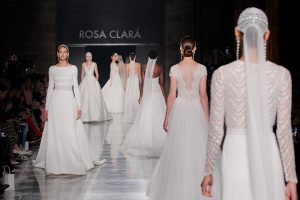
The new Rosa Clará Couture 2020 collection is here! Following the triumphant show at La Llotja de Mar in Barcelona, here’s a summary of the wedding dress trends they set on the runway at Valmont Barcelona Bridal Fashion Week. Contemporary elegance, sophisticated haute couture, figure-flattering sexiness… Their show provided plenty of inspiration to help brides visualise their dream dress.
The first design on the runway was an immediate break with tradition, showcasing wide, diaphanous trousers. And why not? Jumpsuits are an eveningwear trend that they have incorporated into bridal fashion for women looking for something a little different. With every model that stepped out onto the runway, the gowns’ spectacularity increased. Our exquisite lace bodices not only captivated their guests (who included well-known faces like Eugenia Silva, Valentina Ferragniand Antonela Rocuzzo) but also brides-to-be worldwide watching the live stream on their website (you can relive it here).
Art Deco inspired several of these exclusive designs showcasing beautifully crafted linear lace, adding stunning sparkle to make bridal fashion even more magical. The skirts on show could also have come straight from a fairytale. Light and soft, they create a sensation of weightlessness that makes the bride feel like one in a million. But to really appreciate these stunning dresses, you need to see them close-up, feel their fabrics against your skin and try them on. That’s haute couture, and that’s what the Rosa Clará runway collection is always about. It’ll be in outlets shortly!
Champagne was the first sparkling wine and it is arguably the most famous in the world. However, only wines made in the Champagne region of France may be called Champagne nowadays. Spain produces many fine sparkling wines, called cava after the cellars in which the wine is produced. Many Spaniards may call this wine champán colloquially, but they are not allowed to officially label the wines this way, despite the fact that these wines are made under the “Méthode Champenoise” or “Champagne method,” which is the same method that is used to make Champagne wine.
Because Spain is part of the European Union, the wine labeling system is pretty similar to those of France and Italy. The category you will most often see at your local shop is Denominación de Origen (DO), which is the equivalent of an Appellation d’Origine Contrôlée (AOC) in France. Each individual DO (for example, Ribera del Duero or Rías Baixas) has its own rules for the wines, such as which grapes can be planted. If for some reason you can’t find the DO on the bottle, the “logo” of the DO should be on a sticker on the back or on the capsule over the cork.
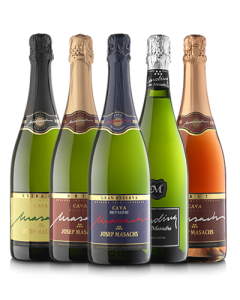
You’ll mostly find Cava production in Catalonia in the southwest of Barcelona (Sant Sadurní d’Noia / Penedés). Cava goes through the traditional method of secondary fermentation in the bottle to get its bubbles, like Champagne in France and Franciacorta in Italy. Cava can be white or rosé and is usually a blend of Xarel-lo, Macabéo, and Parellada grapes, but a few other varieties are also allowed in the blend. Cavas are usually dry, but like with Champagne, the amount of sugar from the dosage will be indicated on the label with such terms as Brut or Semi-Seco. If you’re looking for not-too-pricey sparkling wine for a special occasion or a weekend dinner, cavas as Agustí Torelló Mata or Cavas Masachs are a great choice.
Spring-summer season is the quintessential time for increasingly numerous music festivals throughout Spanish geography. With astronomical figures of assistance and an economic impact valued in hundreds millions euros, these festivals represent a tourist claim for Spain and the cities that host them, cities increasingly aware of their ecological sustainability and respect for the environment in which they take place.
In spring and summer, about 150 music festivals are held in Spain. Only the top ten biggest festivals in Spain have an impact on the cities that host them valued over 400 million euros. It’s the impact of spending on hotels, apartments or various purchases from more than 1.6 million attendees, according to data from companies in the sector.
The appeal is obvious: These festivals offer the possibility of enjoying best bands and live music for several days: First-line bands combined with new talents to discover and a mix of musical styles, with better venues and also more services (for example, food and fashion), in privileged environments, whether urban or coastal. There are options for all tastes (and pockets).
The most famous Spanish music festivals
Arenal Sound (Burriana, Castellón): 300,000 attendees in last edition.
Rototom Sunsplash (Benicàssim, Castellón). The reggae festival, which this year celebrates its 28th edition, attracted 220,000 attendees with a reusable plastic glass system and other measures put in place to reduce plastic consumption. .
The classic FIB, also in Benicàssim, brought together 114,000 people last year.

Without moving from the Valencian Community, Low Cost, in Benidorm (Alicante), with 80,000 attendees, had an impact of 14 million euros on the city.
The relatively new (seventh edition) Medusa Festival, in Cullera, broke its attendance record with 165,000 spectators last year, and was the one that most raised in the province of Valencia: about 22 million euros impact on the city.
In Barcelona, two already canonical festivals: Primavera Sound, with an attendance of 200,000 people, and Sónar who hopes to recover the record figure of 123,000 attendees in 2018 edition.
Madrid is stomping in organizing these events and has regained ground. Mad Cool brought together 135,000 attendees in 2017, its third edition, while, in its debut at the festive scene, Download exceeded 100,000 attendees.
The north is not far behind when it comes to festivals. Two of the largest take place in those latitudes: Bilbao BBK Live and Sonorama Ribera (Aranda de Duero) broke their own records last year, exceeding 100,000 attendees each one. Sonorama with 20 years of history, has been recognized as Best Large Format Festival in the last installment of the Fest Awards.
In the south, Dreambeach Villaricos (Almería), with 175,000 spectators, completes the list of most massive festivals, next to the Viña Rock in Villarobledo (Albacete), which closed its 21st edition (April 2018) with an attendance of more than 200,000 people, according to the organizing company.
Buy from Spain can help you buying tickets and anything you need to enjoy your festivals time in Spain. Contact us for any request!
Kids’ World Spain is a B2B marketplace for professionals with direct access to catalogues and virtual showrooms of Spanish main brands for kids’ fashion, baby products, baby wear and footwear made in Spain.
If you are an overseas purchasing manager for a store chain or department store (or if you want to invest in a new franchise) here you can discover all the news, collections and exclusive showrooms of kids’ brands from Spain in just one click. Kids’ World Spain is a marketplace that seeks to help stores and brands to digitalize their buying and selling processes with a clear objective: Make a sustainable future. It’s a project that seeks to boost the visibility of kids’ brands from Spain throughout the world, as well as the digitalization of their purchasing processes, optimizing resources, minimizing expenses and protecting our environment. You get a direct contact and fluid communication with the brands, so you can ask them about collections, distribution… and get direct access to their exclusive showrooms.
Floral prints, tropical, ethnic, striped and checkered patterns… Made in cotton, linen, gauze or tulle flow fabrics. Animal prints, adventurous inspiration and marine leit motifs… Fresh and vibrant colours from Spain!
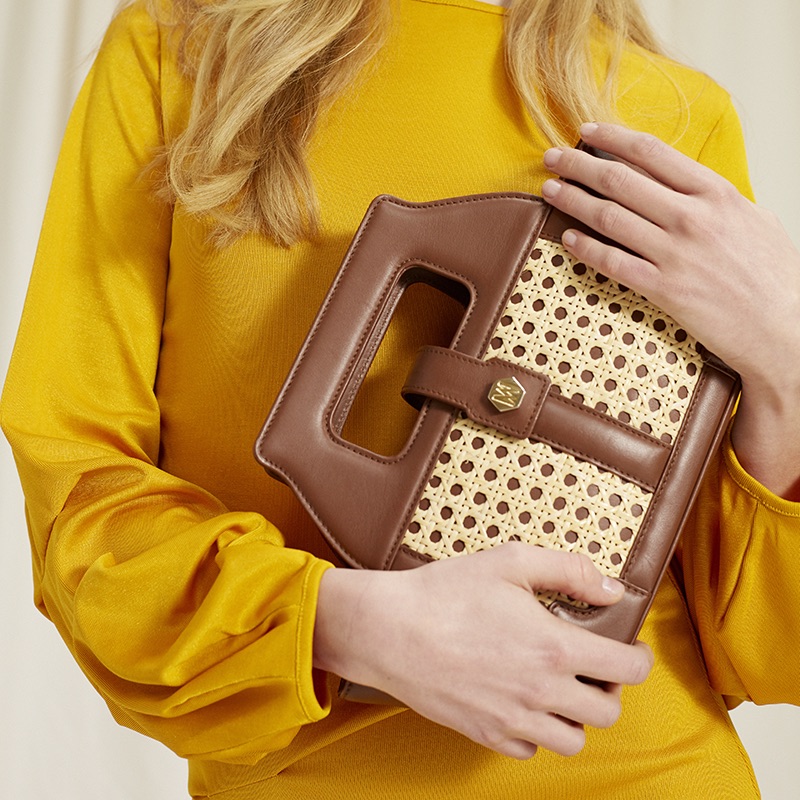
The firm Magalie was born out of a desire to share and celebrate duality, a very personal and intimate life philosophy. They share duality with women with personality, who are daring and authentic, who appreciate Spanish craftsmanship without sacrificing sophistication, who admire beauty without sacrificing functionality, who treasure luxury but are unpretentious. Magalie handbags long for something that expresses their personality and their way of life. These are women who will appreciate a unique, timeless, gorgeous and truly exclusive fashion accessory, very much like they are themselves.

This is why the Duality collection includes limited and numbered production designs of 121 handbags. Every client who acquires one of the limited and numbered Duality handbags knows that she holds one of the only 121 units that exist in the entire world. Not a single one more.
Every Magalie bag is exclusively made in what many consider the birthplace of leather craftsmanship in Spain, the internationally renowned city of Ubrique, Cadiz. Each piece is made using traditional time-honoured methods and handcrafted individually, with the utmost attention to detail. All materials and elements that compose each piece are of the highest quality, with a special mention to their leather.
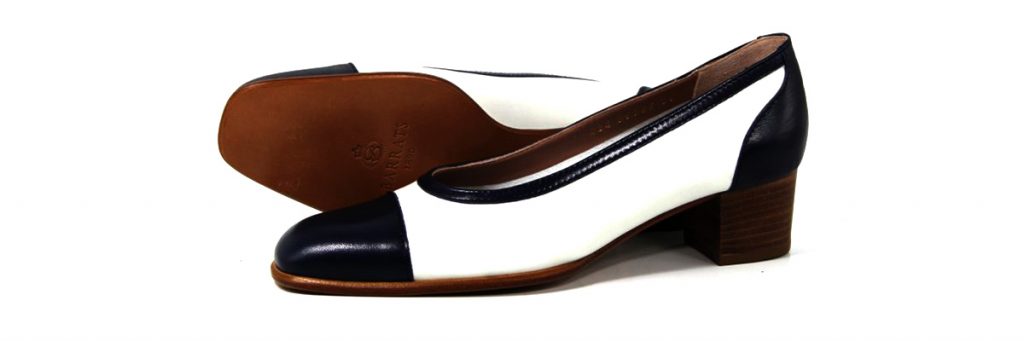
The island of Mallorca, in the Mediterranean, its people, its mountains, its wonderful hidden places, its villages, its sea… All these attributes are the origins of Barrats 1890 and where creativity and inspiration comes from its collections, designs and quality. Craft made in Spain and cutting-edge technology emerge to create Barrats 1890 shoes.
In 1999, Barrats 1890 opened its modern facilities in Inca, located in the heart of Mallorca. Currently, main facilities consist of more than 3000 square meters and it is where the production of men’s and women’s footwear is made.
This brand is based on a sophisticated and elegant concept that evolves every season according to global trends. His designs reflect a particular style resulting from being manufactured with a selection of first-class materials with the attribute “100% Made in Spain”.
Barrats 1890 is aimed at a select customer, with a product that maintains its traditional values, elegance, quality and comfort with elegant, modern and exclusive proposals.
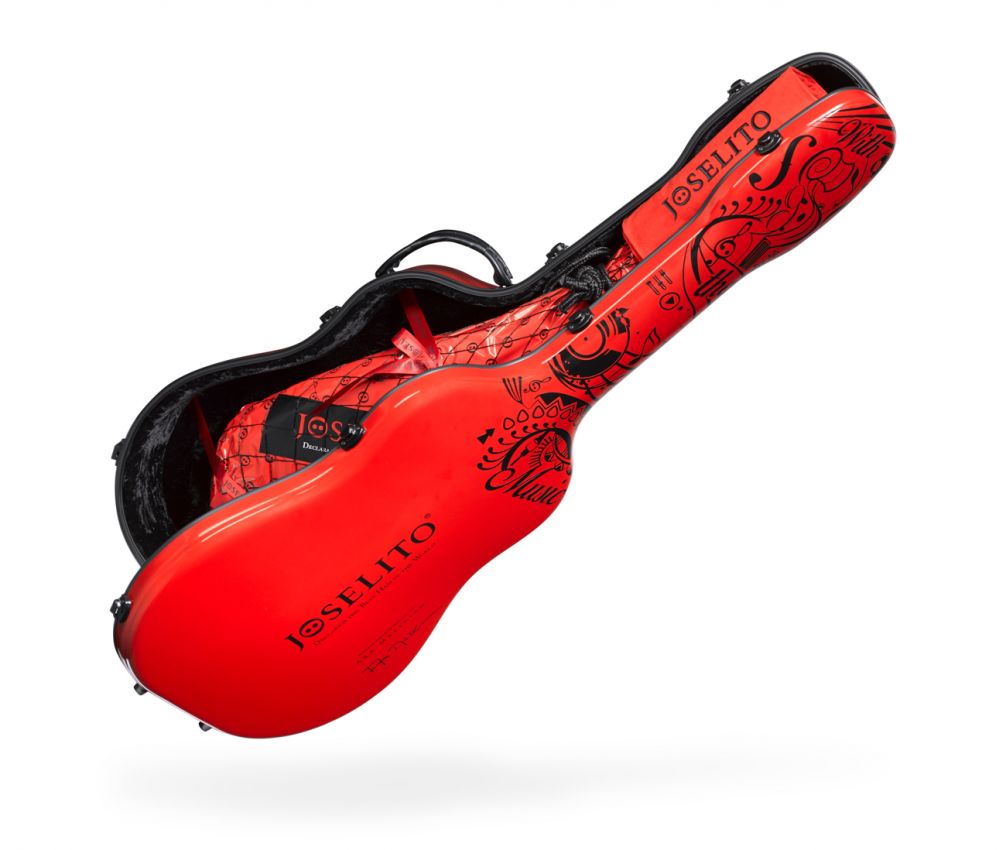
In 2015 Joselito celebrated their twinning with music. After the past editions in which architecture (Moneo Collection), art (Fernando Bellver) or fashion (Andrés Sardá, Swarovsky…) were promoted, in 2015 music was the driving force behind the case that protects these unique pieces, Joselito Ham Vintage, a ham with 8 years of curing.
These masterpieces of Joselito hams are totally exclusive, offering unrepeatable organoleptic properties. The Malikian collection is limited to 88 guitar-shaped cases, signed by Ara Malikian. This extraordinary Spanish violinist of Lebanese origin is a true lover of Joselito Ham. Having played and performed various concerts in best venues and theatres worldwide, he has been able to evoque the flavour and aroma of Joselito Ham Vintage with his violin.
These cases of incalculable value are numbered and contain a certificate of authenticity of Joselito and can only be bought in the most exclusive establishments in the world.