Hola Blog!


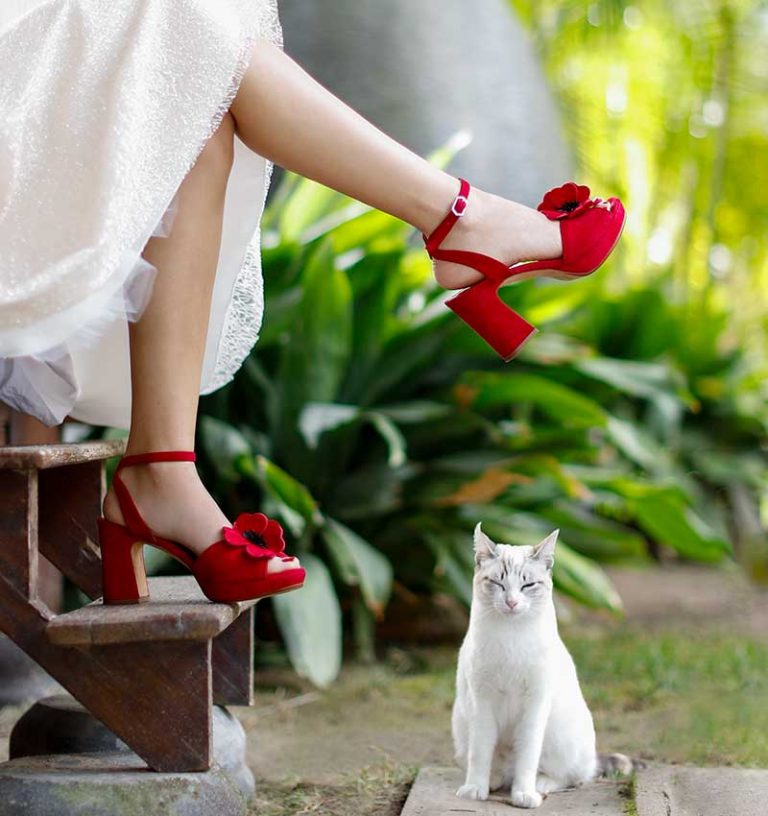
There is no need to always wear the same black shoes. The only way to learn how to dream is by playing. Chie Mihara does not believe in aesthetic limitations or cultural barriers. She was born in 1968 to Japanese parents in southern Brazil’s bohemian and coloristic Porto Alegre. At the age of 18, she packed her bags and traveled to Fukuoka, Japan, where she studied fashion at the design school. Upon graduating, she moved to Tokyo and joined Junko Koshino’s workshop. This vanguard designer, whom Chie continues to refer to as sensei, understood that creativity is an exercise in personal identity that does not require exploring far-off worlds. For the next two years, Chie worked as her assistant and pattern designer.
By this point, Chie’s relationship with fashion had already become a story of joy and disenchantment, passion and weariness. She decided to leave it all behind and relocate to New York to try her hand at sculptures. This did not last long. Five months later, fashion once again came knocking in the form of a shoe, an accessory in which she found the perfect balance between style and art. She enrolled in New York’s prestigious Fashion Institute of Technology, where she specialized in accessories. Her next step—logical yet unusual—was to work in an orthopedic shoe store, where she learned how to pamper and respect feet, which are oftentimes a tortured afterthought.
Following a two-year stint in the Sam & Libby shoe design department, she set her sights on Europe and began working with Charles Jourdan, the renowned French luxury shoe brand. In 1994, she took the leap to Elda (Alicante, Spain) by the hand of this company, for whom she continued to work over the next two years. Three children and three and a half years later, in December 2001 she decided to take the big step of creating her own brand alongside her husband and with the manufacturer’s support: Chie Mihara. The company is now solely run by the couple, with her husband as CEO and Chie as the creative director. 21 years and 41 collections later, the thousands of pumps, booties and sandals are proof that there is life beyond the basics.
The history of Nordés, Galicia’s very own gin, began with a group of friends and a dish of octopus. Whilst enjoying this traditional Galician delicacy, a renowned sommelier and winner of the Nariz de Oro awards 2004, a Galician winemaker and a master distiller began to imagine a Galician gin which would be made using local ingredients and be truly different from other gins. After much trial and error, they finally found the perfect combination of ingredients, which captured the essence of Galicia, giving rise to what we now know as Nordés.
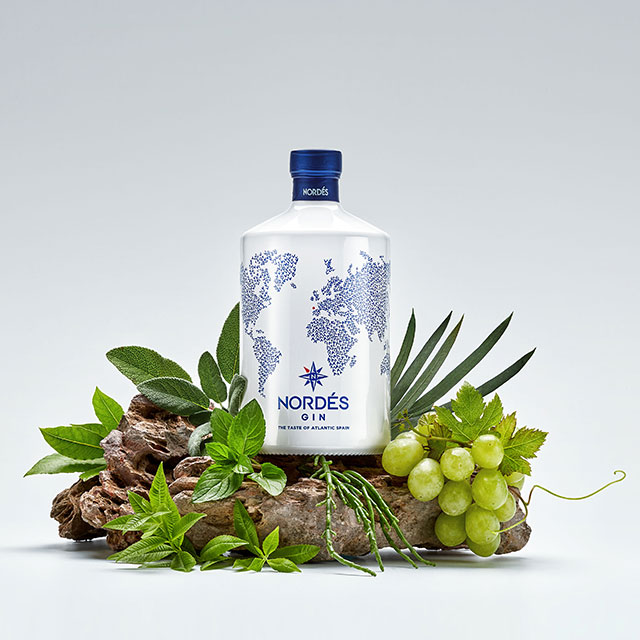
Nordés is the first Atlantic Galician Gin, a premium gin with a different flavour which is a breath of fresh air and is revolutionising the world of gin as we know it. Its fresh, aromatic yet well-balanced character make it a unique gin which truly stands out from the crowd. The inspiration for its distinctive white and blue bottle, with its unique design, comes from the the traditional porcelain products made by hand in Sargadelos, in Galicia. Nordés is named after the wind that heralds the arrival of fine weather in Galicia (Nordeste, North-East).
The albariño grape, native to Galicia, makes Nordés an exceptionally easy-to-drink gin. The fruity notes and smooth aroma of the grapes combine with a selection of carefully macerated botanicals to create an unparalleled gin. The result is a perfect fusion of Galician and world flavours. The botanicals used in Nordés are sage, bay leaf, lemon verbena, eucalyptus, peppermint, glasswort, ginger, cardamom, hibiscus, black tea and, of course, juniper. The exact amount of each one is added to achieve the subtle and well-balanced notes which give it its distinctive aroma.
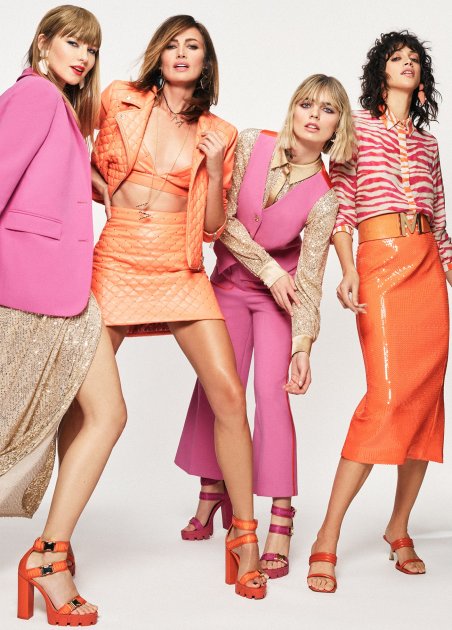
Floral prints, candy pinks, sailor stripes and vibrant reds or current codes in animal print. Spring has already arrived for Lola Casademunt and Lola Casedemunt by Maite lines. It does so with a campaign in which Nieves Álvarez repeats as image and perfect firm ambassador with a growing loyal number of customers inside and outside Spain. Forty years of history endorse the trajectory of a company that emphasizes attention to detail, craftsmanship and high quality materials.
Lola Casademunt origins as a firm can be traced back to Mrs. Lola Casademunt herself, when in 1981 she used her house basement in Cardedeu (Barcelona) to handcraft delicate bows, headbands and other hair accessories. Thanks to her enthusiasm, her high level of self-demand and ambition, she managed to sell these handcrafted objects made with so much care in nearby stores.
Shortly after, her daughter Maite Casademunt joined the project to give a necessary twist to the firm that made her grow, adding a fashion line. Maite Casademunt devised a woman’s image with a very characteristic style, in which the enjoyment of fashion and trends stood out, and managed to position the company as one of the leading firms in Spain.
Since 2018, Maite Casademunt along with her husband Fernando Espona, lead the firm as president and creative director, bringing a young look and in touch with the trends that mark the pulse of fashion. A generational change that does not fail to find value in the rich legacy of 40 years of history.
Last autumn-winter 2021, the brand launched an image campaign entitled Call Me Lola, in line with its international ambitions. For this, no one better to put a face to it than a model as much ours as recognized around the world, Nieves Alvarez. The perfect ambassador to convey the character and DNA of a firm as full of personality as Lola Casademunt, which for this spring-summer 2022 repeats wearing a collection as optimistic as marked by the enjoyment of fashion. Mediterranean beaches and good weather serve as inspiration for a collection that invites enjoyment in saturated colors, nostalgia and very, very summery garments. Fashion to enjoy and to live it.
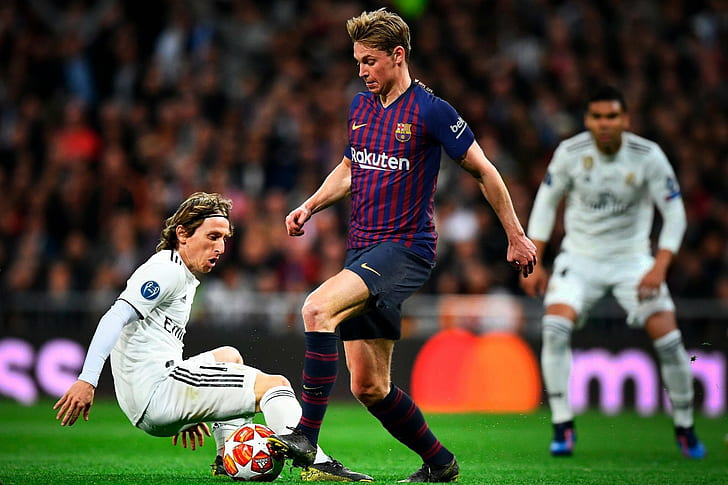
The origins of this rivalry date back to the early 20th century, when Real Madrid and FC Barcelona first started competing against each other. Over the years, the tension between the two sides has only grown, with each game serving as a symbol of regional pride and identity. The matches between Real Madrid and Barcelona are not just about football, but about politics, culture, and history.
El Clásico is one of the most highly anticipated football matches in the world, and it’s no surprise that it is considered one of the biggest sporting events in Spanish culture. The rivalry between Real Madrid and FC Barcelona is fierce, with each team boasting a long and storied history. The two sides have met more than 240 times, with each game often being a highly charged affair that captivates audiences around the world.
For many people, El Clásico represents a clash between two very different regions of Spain. Real Madrid is often seen as representing the more traditional, conservative values of the country, while FC Barcelona is viewed as a more progressive, liberal city. The rivalry between the two sides is often portrayed in the media as a struggle between the central government and Catalan separatists, with each team representing a different side of the debate.
Despite the political overtones, however, El Clásico is ultimately about football. It’s a chance for the two best teams in Spain to face off against each other, with the winner often being crowned as the country’s top team.
For fans of both sides, it’s a chance to see some of the world’s best players in action, with each team boasting a long list of legendary players who have left their mark on the game. Over the years, there have been countless memorable moments in El Clásico. From the iconic goals scored by Lionel Messi, Iniesta, Lewandowski… for FC Barcelona and Cristiano Ronaldo, Benzema, Modric for Real Madrid, these matches are always packed with drama and excitement. Even when the two teams are not at their best, the tension and intensity of the game can still make for a thrilling spectacle.
Ultimately, El Clásico is much more than just a football match. It’s a symbol of the deep-seated cultural and political tensions that exist in Spain, as well as a celebration of the country’s rich sporting heritage. For fans of both teams, it’s a chance to come together and support their side, while also experiencing the thrill of one of the world’s greatest sporting rivalries. Whether you’re a die-hard fan or simply a casual observer, El Clásico is an event that should not be missed.
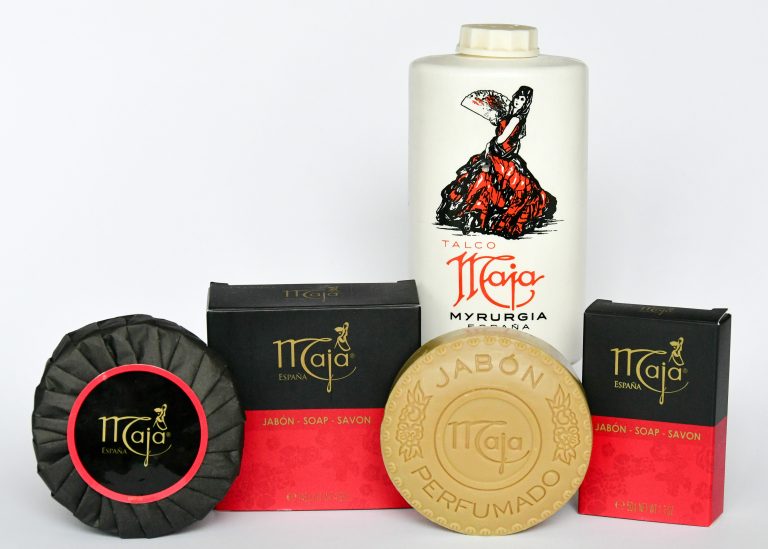
Myrurgia is a perfumery company founded in Barcelona in 1916 by Esteve Monegal y Prat. It achieved a very important presence not only in Spain, but also in the international markets, with products – colognes, soaps, perfumes – that played with the charisma of orientalism (“Maderas de Oriente”), Hispanic exoticism (“Maja”) or even clear hedonistic evocations (“orgía”).
Among the creations of this firm are the colognes and perfumes 1916, Myrurgia, Joya, as well as lines created for other firms, such as Adolfo Domínguez, Antonio Miró, Amichi, Don Algodón, or Massimo Dutti, among others.

Monegal’s status as a plastic artist led him to be very careful in the presentation and advertising of his products, which were always of high quality thanks to the collaboration of artists such as Eduard Jener and Jacob Baron de Wilkinson. “La Maja” line of soaps and perfumes poster is a drawing by Eduard Jener, who was inspired by the dancer Carmen Tórtola Valencia and a photograph of her show La Tirana.
Myrurgia was installed in a building designed by Antonio Puig Gairalt (1930), one of the most outstanding of the present Catalan rationalism, whose decoration is paradigmatic of art deco, and with a three-part bronze relief frieze on the façade, the work of the Madrid sculptor Reste (Restituto Martín Gamo).
In 2000 this historic brand was acquired by Puig perfume corporation.
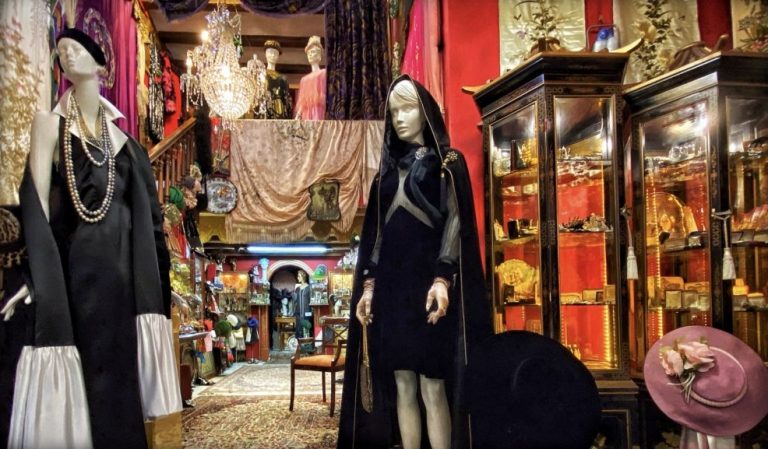
Some streets in Madrid and Barcelona have become real centres of attraction for vintage lovers. Shops dedicated to this trend follow one another door to door, offering all kinds of objects related to nostalgia, to the past.
More and more people are becoming interested in buying objects from other eras, objects that can no longer be found, objects that are no longer manufactured, that are no longer profitable for modern industries that value low-cost, mass production and, on many occasions, with programmed obsolescence.
There are specific fashion shops where you can find everything from hats to dresses, from 70s accessories such as headbands or hair clips to boutiques specialising in furniture and everyday objects from 80s homes, where you can find cupboards, duralex glasses or arcopal coffee sets.
“Many people’s faces change when they come in. They recognise in some object something from their childhood, something they had at home when they were little or that brings back memories of their parents or grandparents”, explains Cristina Ortega, owner of Amores Eternos in Madrid, a shop specialising in vintage fashion, but which also offers other antique products as Heritage in Barcelona.

Vintage is also making a comeback in the technology world. Analogue products are making a comeback, as shown by the sales figures for vinyl records, which have overtaken CDs, and disposable cameras, which are growing all the time.
“Imperfect is now a value. Putting a vinyl on the turntable and listening to the needle sputtering… Or taking photos with the risk of one coming out wrong, with your eyes closed. Digital is so perfect, so clinical… That it loses all the fun”, reasons Francisco del Pozo, a judge who has a YouTube channel with more than 35,000 followers where he gives advice on vinyl and hi-fi equipment.
Cristóbal Benavente, from Sales de Plata (Silver salts) photographic studio in Madrid, is of the same opinion: “When you shoot in digital you think… One of 400 will turn out well, so you just shoot. And the fun of analogue is to stop and think because you only have 36 and you have to spend time evaluating which photo you want to take. Also, there’s a texture, the grain… it’s something that in digital you can only imitate, so why not go straight to the original”, he explains.
Fans of analogue photography continue to grow, and curiously, among the younger population. “It’s funny, but nine out of ten people who come into the shop are young people who want to shoot analogue and learn how to develop. There is a lot of pull, and as an example, some analogue cameras have gone up in value, multiplying their price by up to ten times”.
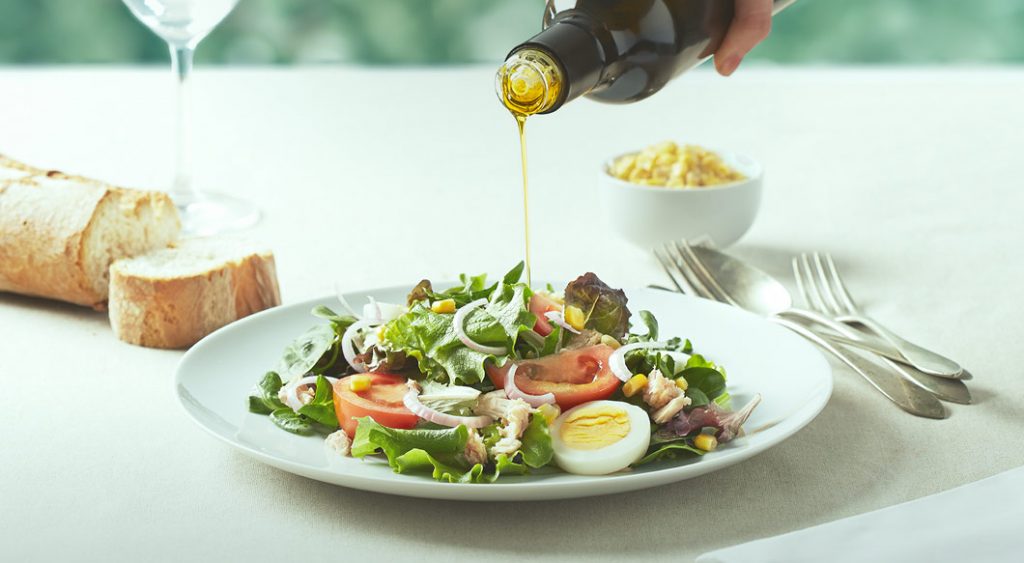
More than 200 varieties of olives are grown in Spain. And each one has its own unique flavors and aromas. Olive Oils from Spain is a directory where you can discover their characteristic flavors and aromas, and learn now to recognize them and their Extra Virgin Olive Oils.

These are just some of the more than 200 varities that are grown in Spain. We treasure a rich heritage that offers immense culinary possibilities: Arbosana, Alfafara, Argudell, Arróniz, Bical, Callosina, Canetera, Carrasqueño de Alcaudete, Carrasqueño de la Sierra, Castellana, Changlot Real, Gordal de Hellín, Limoncillo, Llumeta, Lucio, Manzanilla de Hellín, Morrut, Ocal, Pajarero, Palomar, Pequeña de Casas Ibáñez, Pico Limón, Picual de Almería, Rojal de Tarragona, Royal de Calatayud, Vallesa, Vera, Verdial de Badajoz, Verdial de Cádiz, Verdial de Huévar, Villalonga…and many more. Discover them!
Spain occupies a prominent place as the world’s leading producer and exporter. Our great diversity of olive varieties has given rise to a range of unique olive oils in the world, and this factor, coupled with the latest technologies and most modern development processes, results in the highest quality oils in the world.
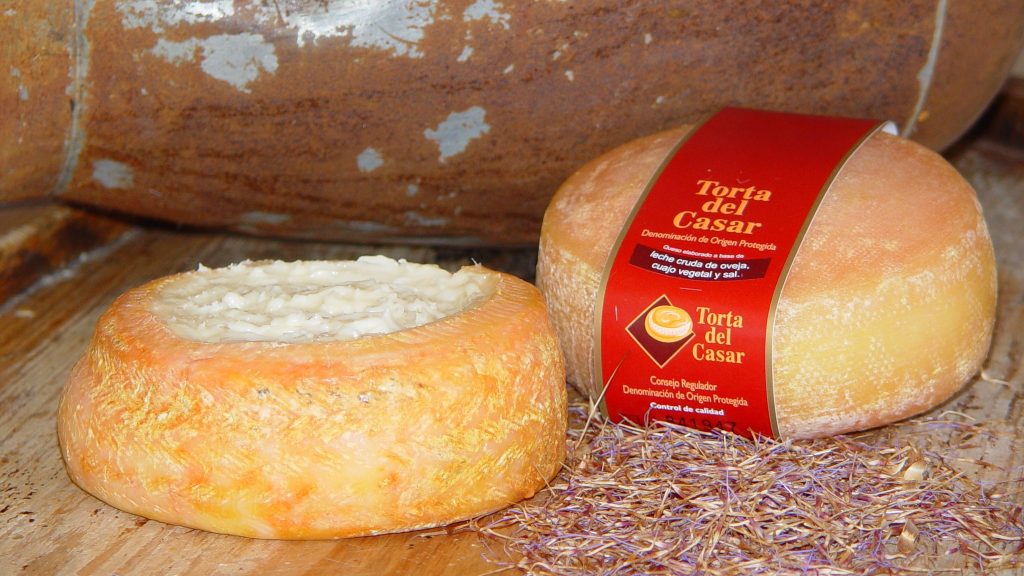
The area where Torta del Casar Spanish cheese has traditionally been produced is located in the centre of south-west Cáceres province, encompassing Llanos de Cáceres, Sierra de Fuentes and Montánchez villages. Torta is a natural cheese, made using traditional methods with raw sheep’s milk from controlled herds, vegetable rennet and salt. Like all cheeses in the world, it was born of the need to preserve the milk, since the only way in which it could be preserved from deterioration in the past was by transforming it into cheese, which allowed it to be consumed throughout the year.
However, due to special climatic conditions in this Spanish area and the use of vegetable rennet extracted from the wild thistle Cynara Cardunculus for curdling, a process occasionally occurred which the shepherds considered accidental and undesirable, since the result was a very soft cheese which, when the rind was not yet fully formed, would sink under its own weight and which they knew as ‘atortaos’, since its atypical shape was more like a flour ‘torta’ than a traditional cheese.

Given that this phenomenon occurred almost exclusively in the regions surrounding Casar de Cáceres, a town located eleven kilometres north of the capital of Cáceres, this cheese has been known for centuries as Torta del Casar, having gone down in history as the cradle of the product and the place from which its traditional method of production has spread to other nearby areas.
The result is a cheese with a light, thin, semi-hard rind. Its main characteristic is its highly creamy texture, which means that at certain times during the maturing process it must be bandaged to prevent the white to ivory-coloured paste from spilling out through the cracks in the still soft rind.
With lactic and vegetable aromas and an intense, developed taste, it is melting on the palate, very slightly salty and slightly bitter, a characteristic that is due to the use of vegetable rennet.
It should be noted that all the cheeses covered by the Torta del Casar Protected Origin Designation come with an exclusive numbered red and gold control label, which is the common element that distinguishes it from any other cheese of similar characteristics, a guarantee of origin and tradition. Torta del Casar can be found in three different formats, from 200 to 500 g., from 500 to 800 g., and from 800 to 1,100 g.
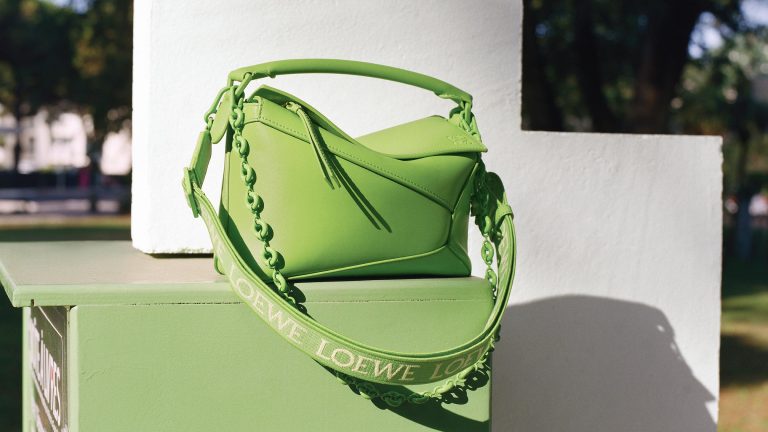
From their humble beginnings as a leather making collective to becoming a leading global brand, Loewe‘s journey has always been defined by an obsessive focus on craftsmanship and an unmatched expertise with leather. Based out of their main workshop in Madrid, which remains in operation to this day, master artisans combine their accumulated craft knowledge with new technologies and innovative ways of thinking to produce truly modern objects of desire.

The most recent chapter in Loewe‘s story has been marked by the appointment of Jonathan Anderson as creative director in 2013. Since taking the helm, he has spearheaded a major rejuvenation of the house. With its distinctive geometric lines and cuboid shape, the debut Puzzle bag for Loewe by Jonathan Anderson is instantly recognisable and precision crafted in 75 flawless leather pieces.
Through a fresh redesign of the brand identity, a modern articulation of their commitment to craftsmanship with the launch of platforms like the Loewe Foundarion Craft Prize, and a series of critically acclaimed and genre-defining Women’s and Men’s collections, the house has been further elevated as an influential and global cultural force.